On the ground floor of the museum, visitors can discover how the city’s defences evolved in step with Tournai’s economic development.
A first town wall, dating from the 11th and 12th centuries, was besieged twice, in 1197 and 1213. It was within these walls that, in 1214, King Philippe-Auguste awaited the army of the German Emperor Otto and his English and Flemish allies. Warned of the coalition army’s arrival, the king left Tournai and lured the army towards Bouvines, where it was defeated on 27 July 1214.
The second town wall, built between 1277 and 1302 on the orders of Philip IV of France, boasted 65 towers and 18 gates, including two sluice gates controlling the river Scheldt, and surrounded a town that had expanded from 55 to 190 hectares. These walls withstood two sieges in 1303 and 1340, the latter led by the King of England himself. Tournai’s municipal militia participated in almost all the campaigns of the kings of France during the Hundred Years’ War.
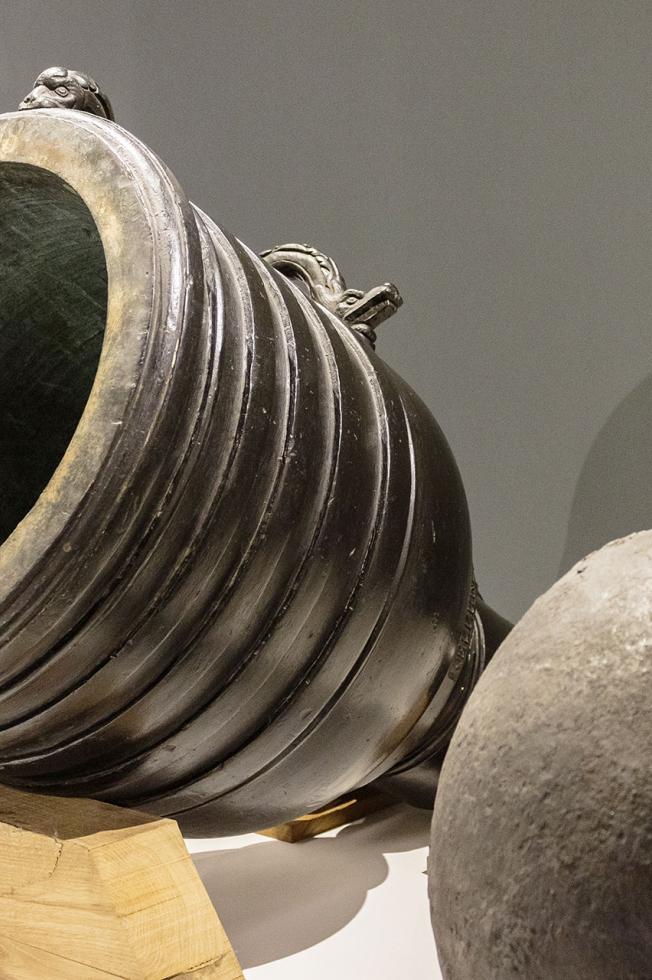
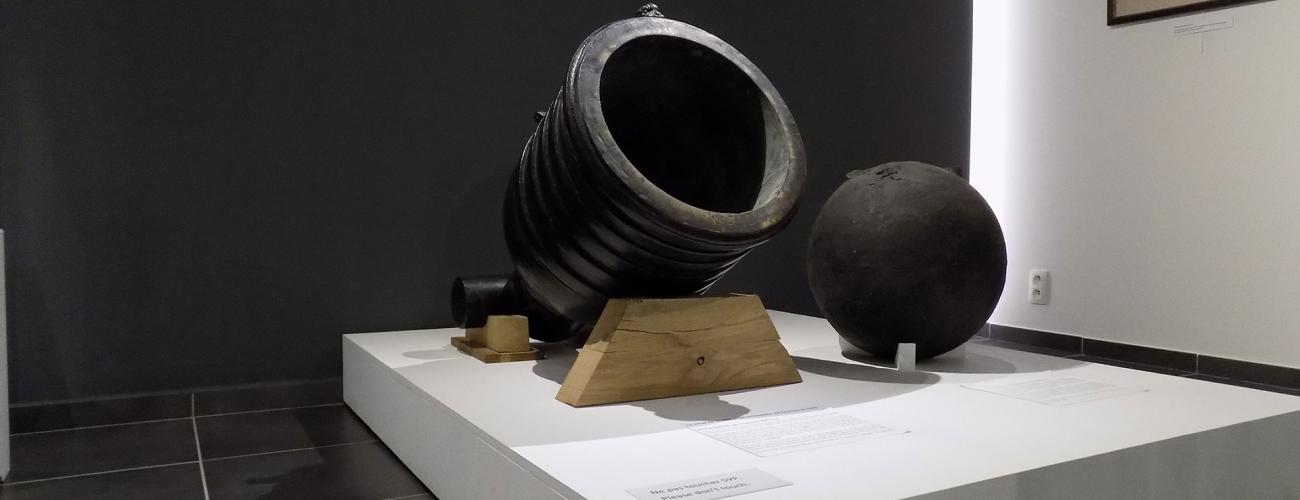
A remarkable piece of artillery bears witness to the power of the town’s defences: an iron firing chamber from the first quarter of the 15th century, classified as a Treasure of the Wallonia-Brussels Federation.
In 1513, the medieval walls were no longer able to withstand the iron cannonballs fired by Henry VIII’s canons, and the town surrendered. Tournai was once again French. However, in 1521, the town was taken by Charles V, King of Spain and Holy Roman Emperor.
The town became French again in 1667. Louis XIV ordered a citadel to be built and had the town’s fortifications reinforced, making Tournai one of the most imposing strongholds in Europe. But in 1709, the allied armies, led by the Duke of Malborough and Prince Eugène, invaded Tournai. After a month-long siege, the town surrendered; the citadel held out for another month, under heavy fire.
A 15-inch French cannonball, cast in 1684 in Douai by the Keller brothers, is a relic of this siege war.
In 1745, during the War of the Austrian Succession, French armies laid siege to Tournai, which had become a strategic stronghold defended by a Dutch garrison. Louis XV and the Dauphin came to witness the siege. On 11 May 1745, the Anglo-Dutch army commanded by the Duke of Cumberland, son of the King of England, which had come to lift the siege, was defeated at Fontenoy by the French army commanded by Maurice de Saxe.
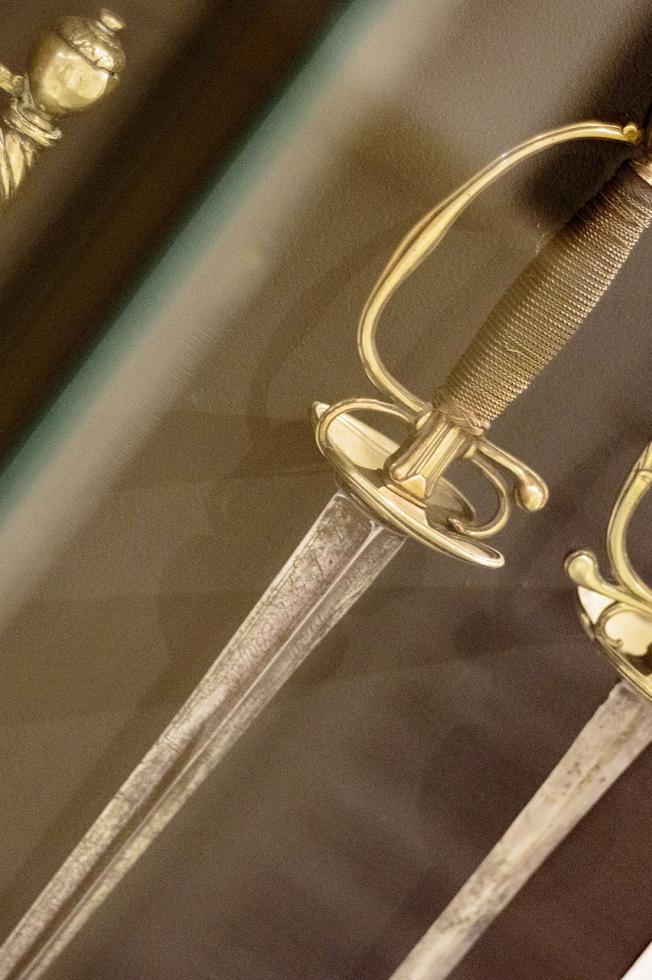
A collection of bayonets and guns gives you an insight into the equipment used by the armies during this bitter battle, including a remarkable Dutch rifle, classified as a Treasure of the Wallonia-Brussels Federation.
Salle Fontenoy
This album contains 7 items.